Showing posts with label street-photography. Show all posts

Monday, April 16, 2012

Why do many photographers present street photography in B&W?

Question

This is more of a general observation and an attempt to analyse it. Most of the street photographs I have come across have been presented (either shot in or post processed) in B&W. Are there notable benefits of doing so other than "it-looks-nice"? Is this a best practice in street photography?

Asked by Chirantan

Answer

When using B&W, you have decided that the colors are suppressing the subject and you want the viewer to concentrate on geometric's. But this is strictly decided by the photographer eye. A more detailed article about this subject can be found here

Answered by andySF

Friday, January 27, 2012

How do I “shoot from the hip” in street photography?

Question

I often hear reference to "shooting from the hip" in street photography. What technique can I use to get candid, yet sharp and focused photographs?

While I am interested in any general advice, the sort of questions I have at the moment are: How do you not make your photography stick out like a sore thumb? What focal lengths, apertures and shutter speeds are appropriate? Do you use autofocus or manual focus?

I am not interested in whether or when shooting from the hip is appropriate. That ought to be the topic for a separate question.

Answer

The idea of "Shooting from the hip" is to be inconspicuous, so as not to change the atmosphere. This allows you to capture the shot as you see it, without interfering with the mood.

  • Manual focus, using a lens that has a distance scale.
  • f/8 allows you to get a much greater depth of field, so even if your focus is slightly off, you should still have a good shot.
  • normal to wide angle, 35mm is a great option.
  • rangefinder cameras are often used with this style, because they tend to be much smaller and favor manual focusing.

Friday, January 6, 2012

What can be unusual POVs/angles for capturing the speaker and/or the crowds?

Question

What can be unusual POVs/angles for capturing the speaker and/or the crowds?

Assumptions:
The speakers are on a high (2 feet) platform.
The fence (see through) is around 12 feet away from the dais.
The people are around 10000 in front of the platform only.
Time is around 10:00 AM.
The photographer can't climb a tree/ladder/wall
The photographer is in the middle of the crowd
The photographer cannot go on/near the dais

?

Answer

I can think of two basic approaches:

  1. identifying a scene isolated, maybe for a single moment, from the rest of the crowd: think of the "riot kissers" from Vancouver
  2. giving a sense of completeness, all the crowd seen together, all the heads closely packed, with a lot of details and a lot of action going on.

From these basic approaches could come the choices to be made (a wide angle will be needed to give a picture of the whole crowd, a tele zoom will help to isolate a single face, gesture, pose, interesting moment). More than the rule of thirds I would care about balancing the crowd in the context of the square/place of reunion: you don't want to fill your frame with the sky losing details of all the people around you.

And, but this goes without saying, it is very important to avoid to get in danger!

ps: if you can't climb a tree, which is not necessarily easy while having the photo gear with oneself, you could always go upstairs, if there are buildings open to the public, no?

Monday, November 21, 2011

What workflow should I use for managing model releases?

Question

Managing and collecting model releases might become a tiresome job, specially for hobby photographers like me. Asking a stranger to sign a paper might become trick in most cases, specially in a 3rd world country where most people cannot read written english. So, is there any effecient workflow for collecting and managing model releases? Do I ask for the sign before or after the shooting session? Also, in case of a complete stranger in a street how do I approach? Do I need to collect model releases for every person I shoot even without knowing whether I will use their image in a commercial way or not?

Answer

Images used for news or artistic works do not normally require a model release. In the first case, it would be unrealistic to expect a newspaper, for example, to get model releases before publishing pictures of a large group of people in a protest. For artistic purposes, there are a large number of street photographers taking pictures of people on the streets for artistic purposes, again without release. Now, in that case, if there was a desire for the image to be used for commercial purposes, such as stock for Getty (which is where I think you're going based on your previous question), they'd be out of luck.

So, for candid photography, getting a model release does give you some additional flexibility in the use of the image, but it's not actually required if the image isn't going to be used for commercial purposes. As for approaching them, well, that's tough... I'd have a hard time with it, I think, but not everyone does.

For actual working shoots, and I've only done a couple, the answer is sign everything before shooting. This includes any model releases, and possibly the buyer contracts, that stipulates the usage rights and other details, including payment. Never do the work until you have all those figured out, it protects you and it protects the models. Don't worry, people modeling for commercial purposes generally expect the release and they won't be shocked by the contents of it.

Wednesday, October 19, 2011

How do I get over my shyness when taking photos of strangers?

Question

Yesterday I went to out for taking pictures and I passed an market. the scene was beautiful seeing peoples selling foods, other peoples trading about price etc etc...

I would have loved to take photos of it, but I was to shy (as I think it's not polite) to shoot photos of them.

What do you do, when you are facing such situations?

Answer

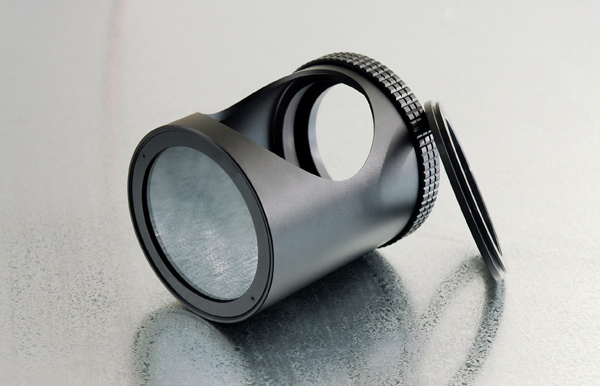
Become a super spy photographer. It is a filter attachment that allows you to shoot around corners, or look like you are photographing somewhere else. Available from Photojojo.

enter image description here

OR...

I know it is hard approaching people, but if you are polite, 9/10 people would be okay with it. If they do have a problem with it, go to the next market stall. Having a business card that says you are a photographer would also help.

Most people take it as a compliment that you want to photograph them.

If they ask, reassure them that you aren't going to use the images for anything detrimental.

If it is a private market, you may need to get release forms (depends on your location, and the intention of the photo).

Monday, October 17, 2011

How to get over shyness when taking photos of strangers?

Question

Yesterday I went to out for taking pictures and I passed an market. the scene was beautiful seeing peoples selling foods, other peoples trading about price etc etc...

I would have loved to take photos of it, but I was to shy (as I think it's not polite) to shoot photos of them.

What do you do, when you are facing such situations?

Answer

Become a super spy photographer. It is a filter attachment that allows you to shoot around corners, or look like you are photographing somewhere else. Available from Photojojo.

enter image description here

OR...

I know it is hard approaching people, but if you are polite, 9/10 people would be okay with it. If they do have a problem with it, go to the next market stall. Having a business card that says you are a photographer would also help.

Most people take it as a compliment that you want to photograph them.

If they ask, reassure them that you aren't going to use the images for anything detrimental.

If it is a private market, you may need to get release forms (depends on your location, and the intention of the photo).

Monday, September 19, 2011

How do I approach people for a natural look in street photography?

Question

I am enjoying taking candid photos of people, but the subject is usually someone I know, or it is during some family/friend event, so after a while the people get used to the presence of the camera and act quite naturally.

I like "street photography" which captures ordinary people in everyday situations and I am thinking about giving it a try.

If you have experience in that type of photography, could you share some tips on how to approach people in a way that the the presence of the camera is not too obtrusive, and you can achieve the natural look on your photos?

I am not interested in paparazzi-style shooting using telephoto lenses, but more in photos taken within the range of 24-85mm lens, which means that you need to be pretty close to the subject.

Answer

[This answer is a community wiki. Please contribute any other interesting and relevant articles or examples to list at the bottom.]

In a slightly different vein to answers so far: don't approach people first, just shoot them. This is mostly for practical reasons; you don't get good street photography by asking permission first (though you will get some great portraits that way).

Some examples in action:

Something you will see in common in these: they are all at ease. Even Meyerowitz bobbing up and down excited about the dogs - he's relaxed. They keep their cameras in their hands, raise it, frame and take the photo quickly, and lower the camera. Then they engage, briefly, and usually non-verbally. Even the quiet and contained Jeff Mermelstein gives a smile or a nod. This isn't impolite or aggressive, it's just a different set of mannerisms and timing.

In as few words as possible: Take the photo quickly and without fuss, then look at the subject, smile happily, and mean it.

That's where you engage your subject, and reassures them this is all totally normal and that you're not doing anything sneaky. It happens quickly, so it's not a big deal. This type of body language, communicating comfort and calmness, works incredibly well. It does not take as much practice as you might think, and you need not be the social butterfly extravert type; again, just look at Mermelstein!

In my several years of shooting street and trying to emulate this approach, the most usual reactions I've seen, in order:

  1. Nothing/vaguely puzzled (60%)
  2. Smile back
  3. Frown/scowl
  4. Ask me about my camera
  5. Apologise for being "in the way"
  6. Annoyed enough to confront me in some way

When you are confronted (it happens), remain happy. Remember that you have a right to be doing what you're doing, and also remember that they have a right to be annoyed. Be respectful and listen. Do not argue or contradict, instead attempt to calm and disarm. If they're yelling at you, often the best thing to do is to walk away. How to deal with all the different possibilities is a whole article in itself, but the thing to remember here is that this is actually quite rare; I've had conversations like this maybe a half-dozen times in total, over about five years of actively shooting street photography.


Other articles and links (please note the date of addition so people can skip to the bits they may not have read yet):

Thursday, September 8, 2011

What points should be taken into account to picture protest gatherings?

Question

Assuming the scene to be:

The speakers are on a high dais (platform/stage).

The fence is around 12 feet from the dais.

The people are around 10000.

Time is around 10:00 AM.

and the photographer cannot go onto/near the dais.

Questions:

  1. What should be an ideal POV (assuming the photographer can't climb a tree)?

  2. What (out of speaker/people/anything else) should be considered to be kept in focus (assuming the max zoom optical to be 14x)?

  3. Any example as to how to apply rule of thirds in such a gathering? Is it even needed?

  4. Any other thing that should be kept in mind regarding shutter speed etc. in this situation?

EDIT 1.

If I am at the back of the crowd, and I want the speakers and the crowd both in the picture, then all I'll be getting is the back of the heads of the crowd. Is it acceptable?

Answer

I can think of two basic approaches:

  1. identifying a scene isolated, maybe for a single moment, from the rest of the crowd: think of the "riot kissers" from Vancouver
  2. giving a sense of completeness, all the crowd seen together, all the heads closely packed, with a lot of details and a lot of action going on.

From these basic approaches could come the choices to be made (a wide angle will be needed to give a picture of the whole crowd, a tele zoom will help to isolate a single face, gesture, pose, interesting moment). More than the rule of thirds I would care about balancing the crowd in the context of the square/place of reunion: you don't want to fill your frame with the sky losing details of all the people around you.

And, but this goes without saying, it is very important to avoid to get in danger!

ps: if you can't climb a tree, which is not necessarily easy while having the photo gear with oneself, you could always go upstairs, if there are buildings open to the public, no?

Wednesday, August 17, 2011

What's a concise "I'm not dangerous" phrase for a business card?

Question

Not being a street photographer, I find myself intimidated by onlookers when shooting in public. Given that and an increasingly hostile government attitude toward photographers, I'm thinking a business card that also contains some fairly simple phrase to explain that what I'm doing is legal and unharmful would help me confidence wise and if somebody actually did confront me.

Is there a common phrase or such, that photographers generally use in these situations? Something I could print up on a card with a name, phone number, and email address.

I'm aware of the I'm a photographer not a terrorist movement, but its largely UK centric.

Answer

Before I start pontificating, a disclaimer... My experience is necessarily US-centrc as that's where I live and work. Over the years these methods have worked equally well for me in large cities with jackboot-style authorities (LA, New York, etc.), as well as smaller cities (potentially where the authorities have less oversight and more willingness to shoot first and ask questions later). If you live outside the US, YMMV.


Question: Is there a common phrase or such, that photographers generally use in these situations? Something I could print up on a card with a name, phone number, and email address.

tl;dr: There's not really some 'common' phrase (despite rumors to the contrary, a blank card with the phrase 'Tubal Cain' will not instantly make any authority figure your b*tch, or for that matter get your court case dismissed!). It's more about confidence and positive interaction with people that allow you to shift yourself from the 'sketchy' column to the 'trusted' one.


Over the years I've found that 'dealing with the public' and 'dealing with the authorities' are sometimes two different challenges... However, often the 'tactics' are similar and dealing with both groups starts from the same place: confidence.

The Public

In dealing with the public I 'assume the right' and only ask for additional permission and/or explain myself if I'm first approached. I find that the more confident I am (not arrogant, combative, or argumentative... again, just assuming the right) the less often I get approached. Most of the actual 'horror stories' (as opposed to the often breathless and 'over-hyped' 'big-fish stories' that some photographers like to share on the interwebs or when drinking with their photographer buddies) actually occur because a photographer didn't have polite confidence, and/or they didn't handle the interaction in a positive manner.

If I am approached, I have a 'patter' that I use which goes something like this:

"Hi there, my name is Jay Lance from Jay Lance Photography. I'm a professional photographer on assignment."

[As I'm saying this I hand them my business card... There's nothing 'special' on my card aside from the fact that it is professional looking and contains my contact information. Essentially my opening 'move' is to give them a bunch of identifying information without them having to ask or try to pry it out of me... I've told them my full name, my businesses name, and given them my contact information... All information I give willingly with the intention of showing I have nothing to hide, and all information that matches what's on the business card... The sole purpose of doing this is to begin building trust. I don't generally elaborate that the 'assignment' I'm on is usually assigned by... well... me.]

At this point I strike up a light conversation where I'm trying to do most of the question asking and listening...

['What's your name?' 'Lived here long?' 'How about this weather we're having?' It doesn't really matter as long as I do the asking and really take an interest in the answer(s). The point is rapport building and showing that I'm 'harmless' without ever actually having to say that I am or explain myself (attempting to explain can sound like excuse-making and trigger some people's inner-alarm regardless of the intention).]

After a few innocuous questions I generally finish the 'conversation' this way:

"Well [name], it's been really great meeting you, but I gotta get back to it. Feel free to give me a call at the office [referring to the card I gave them] if there's anything else I can do for you..."

[Politely trail off at the end of this... Resist the urge to explain or justify yourself further and clam up without being dismissive. If the only reason you were approached in the first place was so that the person could make sure you weren't 'sketchy,' then the business card + rapport building conversation should have alleviated their concerns. Most of the time the 'social cue' of 'you're interrupting me while I'm working' that you've just put out there will cause whoever has approached you to dismiss themselves, apologize for bothering you, or something similar.]

After all this if they do have a specific question ('what are you doing?') or request ('please don't take pictures of my house') I answer directly, or comply with any reasonable request. Remember that because I actually don't have anything to hide answering direct questions is no big deal! Sure, technically I have the right to take whatever pictures I want, but c'mon, is it that important to escalate to confrontation over the picture(s) you want to take (or took)? Unless it actually is that important (Holy sh*t, a UFO just landed in your front yard and I'm the only one with a camera!) generally the only thing to be gained by not complying with the person's request or acting like an a*shole is to create argument and potentially instigate a chat with the authorities. Which brings me to...

The Authorities

While much of the above still applies to dealing with the authorities (assume the right, business card up front, polite 'light conversation' which tells someone you're not a threat, etc.) it's important to remember that an authority figure generally has training and extensive experience in 'dealing with the public,' and is far less likely to be impressed by you, your camera, and your patter.

This is the point where some well-meaning photographers are getting themselves into trouble.... Remember that 'knowing your rights' and 'explaining your rights to a cop' are two different things and unless your idea of a good time is spending time in the back of a squad car while a cop figures out what to do with you... Seriously, knowing how you plan to approach this conversation is something to think about before you actually have it!

Having said that... There is an 'almost magic bullet' that you should always have in your back pocket (figuratively- you should actually have this clipped to your camera bag or around your neck) for when you are approached by an authority figure... Something that can strike fear into the heart of any good public servant, rent-a-cop, building manager, or administrator: the power of the press. That's right... I'm talking about every photographers secret weapon: the press pass.

There is nothing like a prominently displayed press pass to convey the unspoken message 'I know what my rights are and I can make serious public embarrassment and possibly lawsuit trouble for you and your organization if you step on them!' without ever being confrontational or even having to say that out loud...

Now there was a time when press passes were a tightly regulated commodity, but these days its possible for any 'average Joe' with a bit of money to get their hands on an actual, legitimate press pass from a real press organization and the credentials that come with it for about the price of a meal for two at a nice restaurant.

The press pass adds legitimacy to your patter, and also subtly lets the authority figure know that you probably know more than the average citizen so they should tread carefully. Now don't get me wrong, I'm in no way advocating that you take an adversarial stance with anyone (unless it is your goal to get arrested and test out the bounds of freedom of the press within the court system). What the press pass potentially does is tells the authority figure that you're 'legit' without you having to use a lot of words (which often only serve to make you sound guilty of something... Even if you're not).

For me the desired outcome is that I shift myself in the authority figure's mind from the 'unknown' column to the 'trusted' column as rapidly as possible. The outcome of the conversation may still be that I don't get what I want, but if I'm asked to leave politely as opposed to being forced to leave in handcuffs, or being treated less-than politely in some way, then the badge has done its job. That's the worst case scenario. In practicality I've had many occasions where flashing the press pass flipped me from 'suspicious' to 'trusted' so fast that I've actually had authority figures offer to help run interference, or to escort me to places that 'the general public' is not allowed to be.

Now I do have to say this... don't lie. Having a press pass doesn't mean you work for the New York Times (unless you do), but most of the time that just doesn't matter. Especially in this day and age where there are more media sources than ever and many are farming out their reporting/photography, being 'freelance' isn't a badge of shame. If asked I proudly (remember that whole confidence thing) tell them that I'm a freelance photographer, and if pressed further I am happy to let people know that I can't talk further about the specifics of the assignment that I'm on. The bottom line is this: professional, polite, and confident will often get you a surprisingly long way a lot of the time.

Finally, depending on where you live it may be possible to take things one step farther and actually become an unpaid freelance photographer for a local newspaper or other media outlet (a 'stringer' in the industry parlance). The photo editor at my local 'real' newspaper and at one of the bigger local free papers will acknowledge my affiliation with them simply because I provide a few shots for their publications every year. All I had to do was ask...

So where to get these press passes? If you can't get one via your local media outlet (you often won't be able to unless you're a paid 'staff' photographer, but it never hurts to ask) There are a variety of organizations that offer them, but two of the more 'legit' sources (they have photographer registries that someone could look you up in, in other words) are:

For a yearly fee both will register you in their database and give you press passes. In my experience the NPPA is more 'legit' than the US Press Association, although I've never had anyone ever question my credentials or 'have to look me up' to verify them, so in reality it probably doesn't matter that much which you go with... You do get a monthly magazine with the NPPA dues, though. :-)

Friday, July 15, 2011

What legal restrictions to photography are there in European countries?

Question

I'm from Ukraine, and I know where I can shoot here and when. I had few trips to USA where I know it's very difficult to shoot on the street, without encroaching on someone else's private life.

I plan a travel to some of the European countries soon, but I don't know what I can shoot, and what can I not?

Is there any proper information (e.g. government website or article) about photography rules in European countries? Is there any difference between photography rules in, for example, Germany and the Czech Republic?

Answer

I live in the Czech Republic, and travelled a little bit around neighouring countries. As for the legal situation, I know we have a freedom of panorama. Practically, I don't remember having any issues with protographing stuff around me, even though there are some private and publicly accessible spaces (like shopping centers), where photography is forbidden, in which case it's probably better not to fight local security when they want you to stop taking pictures.

As a tourist I've recently been to Austria, Germany, Italy, and the UK, and it was completely fine everywhere except for the UK, where some local security guard didn't like me taking the following photo of security-camera-loaded train station. (I didn't quite understand what he was exactly saying, but he let me be after I said sorry and put the camera away.)