Showing posts with label maintenance. Show all posts

Monday, March 19, 2012

How do I clean the external forward-facing glass on my lens?

Question

How do I clean the external forward-facing glass on my lens?

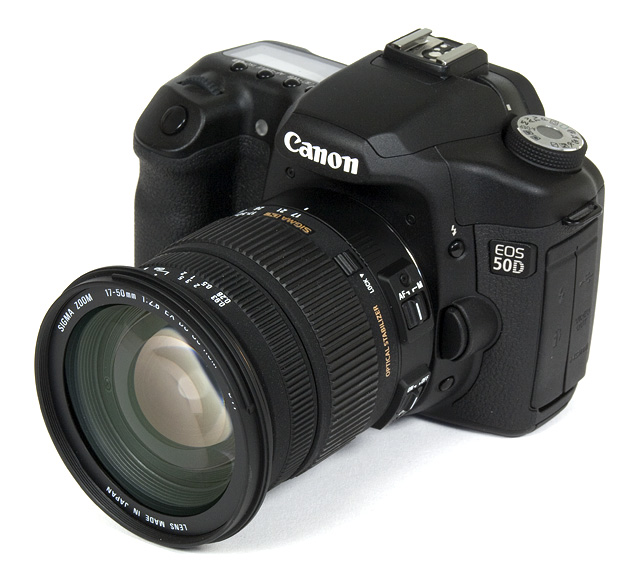
Over the last year or so of use it has accumulated a little dust and a translucent smear mark. Nothing serious, but I'd like to remove them nevertheless. The lens in question is a Sigma AF 17-50mm f/2.8 EX DC HSM OS and has a flat external forward-facing glass element (e.g. see here).

I've never cleaned any camera equipment before, so pitch this to a novice audience please.

Asked by fmark

Answer

Assuming you're just talking about the front element - I use these disposable Zeiss wipes. They do better than a lens pen (which handles dust ok, but doesn't do smudges nearly as well) and a box of 200 will last a long, long time with hobby level use. My local Walmart sells the box of 200 for under 4 dollars in the camera and the optometrist section. They won't harm the coatings on the element and do an excellent job.

Answered by rfusca

Friday, February 17, 2012

What is an auto-focus motor?

Question

I recently bought a Canon 550D, and I read it has an auto-focus motor, which not all cameras possess. I'd like to know what it is, and what I can do to keep it running smoothly; AFAIK the manual doesn't come with instructions on how to improve the life of the focus motor.

Asked by the.midget

Answer

An auto-focus motor is just what it sounds like: a small electric or piezoelectric ("ultrasonic") motor which moves the lens elements to facilitate autofocus.

In some camera systems, this motor is in the camera body, and the lens moved by a physical coupling. However, you actually read some misinformation. Canon EOS cameras do not have a motor in the body, and instead, all lenses have a built-in focus motor.

With Pentax, all auto-focus camera bodies (to date) have a motor, and some lenses have their own. (In that case, the lens motor is used.) That used to be the case with Nikon too, but in the last few years (starting with the D40), the entry-level Nikons have dropped this. That's a big deal, because it means Nikon AF lenses without a motor don't autofocus. As Nikon refreshes the lens lineup, this will be less of an issue (except if you have or want to obtain older lenses and have them autofocus) — lenses like the AF-S DX NIKKOR 35mm f/1.8G didn't exist when the Nikon D40 came out, and that's part of why the Internet was all in furor about this.

So, you often see "no focus motor" as a disadvantage for entry-level Nikon cameras. This leads to the incorrect but somewhat widespread assumption that the natural opposite (for cameras for which this is not an issue) is "has focus motor". That's technically incorrect, but the practical point is that for your camera, the lack of a focus motor is a non-issue.

And also, since there isn't one, there's nothing to worry about for maintenance. Focus motor failure isn't one of the big, highly-reported problems of cameras which do have them, and I don't think there's any particular recommended maintenance.

Answered by mattdm

Monday, January 16, 2012

What is the cause of these round spots on my photograph?

Question

Is this a finger print on the lens? I don't know.
What can be the cause of the round spot on this photograph?
I have many times cleaned the lens with my fingers, never saw anything like this before.

Canon PowerShot SX210 IS

enter image description here

Answer

Spots like this are due to something on or very, very near the sensor. See Dust-like speck visible every few pictures — is it dust, or worse? for another example. Dust in or on the lens can't cause this problem, because, like lens scratches, they'll be so far out of focus that the effect is undetectable (in the same way a window screen becomes invisible when focused far away through it).

On an SLR, you can access the glass protecting the sensor, and it's not much of a worry, since you can clean this. And automatic cleaning technology has gotten better. With my first couple of DSLRs, this was a constant annoyance. The first one had no real self-cleaning mechanism, and the second did, but it was ineffectual. With my current camera, which I got in 2009, I've never once had a problem with dust, and I change my lenses a whole lot more than I did five years ago.

With a compact camera, though, the whole thing will need to be disassembled, and this isn't something you can easily do at home — they're not made to be user serviceable. A camera service center will be able to do it, and if they're feeling charitable may in fact clean the sensor under warranty for free. Out of warranty, or if they decide the dust is due to environmental conditions you should have been more careful about, it's generally unreasonably expensive. (I once paid $100 to have a Fujifilm F31fd cleaned in this way.)

So, in this lovely world of disposable consumer gadgets, most people consider this time to get a new camera. If you get a new camera which doesn't have either built-in sensor cleaning or a way to access the sensor for manual cleaning, consider one with environmental sealing (waterproof is also dust-proof).

Tuesday, November 29, 2011

Do digital cameras lose picture quality over time?

Question

For some reasons when I look at my first pictures from my camera (DSLR), they look stunning. I know it could be just psychological. Another friend told me that her camera was really good when she bought it fours years ago (10 MP), but now it is just ok. I see her P&S very blurry in indoors (almost like phone quality pictures).

A quick search yielded this yahoo answer, which is actually not bad. That answer can be summarized as: not really, but some things make image quality worse. Listed factors include:

  • Dust accumulation on the sensor (blamed for "resolution loss, pixels of false colors, noise, spots")
  • Worn-out moving parts leaving the sensor out of alignment ("focus images, blurry and distorted images")
  • Improper maintenance leading to "blown-out receptors on the sensor" (which lead to "blank spots on the image, false-color pixels and resolution loss")
  • Dust in the lens ("noisy, blurry and distorted images")
  • Scratched or destroyed lens coating ("distortion or false colors due to ultraviolet and infrared radiation reaching the sensor")

Is there any truth to it? What should I be careful for proper maintenance?

Answer

Practically speaking, digital cameras do not lose quality over time.

Some factors can come into play such as:

  • Equipment can wear causing it to be out of spec
  • Environmental factors such as dirt, sand, dust, moisture can degrade quality
  • Heat or excessive use(causing heat) can cause all electronic devices to experience wear
  • Other regular use issues from dropping, lack of cleaning, etc

But overall, these things should hardly turn a great looking 10MP point and shoot camera into a 640X480 resolution cell phone.

Maintenance, is an entirely new question if you would like to ask or search for that.

Is dust in a zoom lens a problem which should be addressed?

Question

I have accumulated some amount of dust inside one of my zoom lenses, visible through the front glass.

It does not appear to affect picture quality as far as I can tell, but I wonder if this is something that can or should be addressed? Who would carry out such a cleaning?

Answer

Dust inside the lens shouldn't be a problem, as it will always be thrown out of focus enough as not to make a difference. Even on the smallest apertures, the depth of field won't extend far enough forwards to make it visible.

If it really bothers you, take it to an independent photo shop and see if they offer lens servicing.

Wednesday, September 14, 2011

What is CLA service?

Question

I've seen the term used in used lens listings, e.g "recently CLA'd".

I have a few questions, but I think they're related enough to only warrant one post:

  • What does CLA stand for, and what is it?
  • How much does it generally cost?
  • How do you decide whether A lens might need CLA?

Answer

"Clean, Lubricate, Adjust", as Maxwell said. It is usually encountered when discussing Leica camera bodies, those things need a checkup every two decades or so. But, yes, lenses can be CLA'd too.

For lenses, it basically means dismantling the thing, cleaning dust and other deposits from the lens surfaces, replacing the goop that lubricates the focus and aperture mechanisms, and (hopefully) putting it all back together in working order.

If I had an old lens where I could see fogging on the internal glass surfaces, where the focus mechanism was uneven, too stiff or too loose, or ditto the aperture mechanism, I'd consider having it CLA'd. I have no hard data on what it'd cost for a lens though; for what it is worth I did pay a couple hundred Euro for CLA on a Leica M3 camera body recently.

Thursday, August 11, 2011

What is the value of periodic service-center maintenance for DSLRs?

Question

I've been contemplating sending my Canon 40D + lenses in for cleaning & maintenance, and as luck would have it, one of the answers on a recent question recommends periodic maintenance to prolong the service life of a camera. As you can imagine, googling this turned up a range of opinions ranging from "if it ain't broke, don't fix it" to "service religiously every x months or y shots".

I'd like to get a better handle on the specific benefits of preventative service for DSLRs, including what, in addition to cleaning, is typically done during servicing. If you have any specific before & after experience with this sort of service ("they fixed stuff I didn't even know was broken" or "I swear I didn't have that problem before I sent my camera in"), that's great, too.

For purposes of this question, I'm talking about a Canon body, but I'd expect experiences with other brands to be pretty equivalent. I'd also expect similar experiences with servicing lenses to be relevant, especially if there's any benefit to sending lenses in with bodies.

Answer

I have never sent my camera in for Preventive Maintenance. I tend to prefer the 'if it ain't broken don't fix it' method of camera maintenance.

One item that needs constant maintenance is removing dust on the sensor. The 40D, with its sensor dust removal shaking is better than most, but eventually, it needs to be cleaned. From what I have read from others, often sending in to Canon results in no improvement in sensor cleaning, or it being worse. At one time it was conjectured that Canon merely blew air on the sensor as 'cleaning'. For this reason, I do not send in my camera for this service, but perform it myself using the easy, and safe Copper Hill method.

Cameras are generally built for their purpose, especially your 40D. The parts that typically 'wear out' are the shutter box mechanism, which, due to the complexity and expense, are rated for a certain expected life in number of shots. This life is not dependent on regular maintenance (you don't do oil changes etc).Some of Canon's cameras actually have a stated shutter life, but I don't think they published one for the 40D,though rumors suggest 100k shots. Whether yours will last longer is a roll of the dice, but sending your camera in won't extend the life. Given the replacement cost (~$300+), waiting for failure is the best policy.

If you have problems with achieving sharp focus with a lens, sending in the body and lens for calibration is highly recommended, and generally I have found much better focus performance as a result. Whether this is because they fixed something, or because it is psychological on my part is hard to tell, but I am satisfied.

While it is possible that, like cars, there are some internal service bulletins that would provide an unknown fix you didn't ask for, I suspect that those are to ensure that the camera does not come back to be fixed for that issue. I would prefer to wait for that issue to arise.

Wednesday, August 10, 2011

How should I take care of my new DSLR?

Question

I am getting a new Nikon D5100 (with 18-55mm VR Lens Kit). This is going to be my first DSLR. I wanted to get some tips from you guys on how to maintain it in the long term. I am getting a 52mm UV Protector Filter, as I read that it would do well to keep the lens clean.

Are there any precautions I need to take?

I would also appreciate if someone can suggest some reading material (paperback or online).

Answer

Since the question is a bit too broad to "fully answer," I'll just volunteer some tips. Hopefully with everyone's ideas combined, you'll come up with a good idea of how to maintain your camera.

I've had a similar camera (Canon t1i), and it's survived two years of intense use by me and a handful of teenage students working with these guidelines...

  • Get a bag/backpack for your gear with padding. Doesn't have to be huge, but it should fit your camera body, the lens you have, accessories (batteries, chargers, etc), and leave room for another lens or two. This makes travel easier, and it can't get caked in dust in a bag.

  • Always put the body cap back on your camera, and put both the front and rear lens cap on the lens if you don't leave the lens on the camera. I hate when I see people toss a body/lens around without the cap on. You could leave the camera assembled all the time if you only have one lens, but I almost always detach my lens and pack everything up when I'm not using the camera.

  • Keep a microfiber cloth (I use these, but anything similar would be good) in your bag to wipe down your lens, and replace/wash the cloth if it appears to be getting dirty. If you get debris on the cloth and wipe your lens, that can be bad. It also helps to keep the lens cap on the lens when you're not using it, so that you don't accidentally get fingerprints on the lens (doesn't happen to me often; but when my students are using the camera it's a whole 'nother story).

  • If your lens comes with a lens hood, use it. It'll help protect the glass from getting bumped/scratched. The kit lens probably doesn't come with a hood, but you can get an off brand one pretty cheap on Amazon. [Thanks to Itai for the comment]

  • Extreme heat is no good. So I wouldn't leave your camera in the trunk of your car 24-7 if you live in a hot climate.

  • Be careful around water. A drizzling rain won't kill your camera, but just don't disassemble the camera or open the memory card door when your outside. If you're out in heavy rain, get something to cover the body of the camera (a freezer ziploc bag is great). The end of the lens can stick out fine, it's the electronics you want to protect.